Engineered textiles are often the most challenging projects in fabric creation.
An engineered textile is a series of different woven or knit structures that are placed in response to a schematic. The process for building an engineered knit requires the procedural generation of each structure, and then combining them according to the schematic.
Below are a few examples of public ally available materials I worked on.
On The Go AOJ
This material was developed as a conceptual iteration of an existing material, and was later used as an educational example on best practices for engineered textile recreation.
The original version of this material was a heavily simplified version of what you see on the right, with the diamond grid being the defining feature. For this new iteration our material designers wanted to retain the diamonds, adding a large floral pattern.


Projects such as this one with a wide variety of different weave / knit structures quickly run into texture resolution issues. Rather than building a perfect 1:1 recreation of each structure I had to attempt to recreate the look and feel with a lower level of detail.
In total, there were four different woven structures that needed to be developed and overlayed in response to either the floral or diamond pattern.
The primary objective for these materials is for them to be accurately recolorable by designers with no 3D texturing ability, often in CLO or Unreal Engine. This requires a much higher level of accuracy in each weave structure, as the ratio of the two colors (blue and white in this example) dramatically alters the perceived color from a distance.


Morpheus
The Morpheus engineered knit consists of two primary knit structures;
a weft interlocking knit as a base, and a larger 2x2 rib knit terminating with a hole.
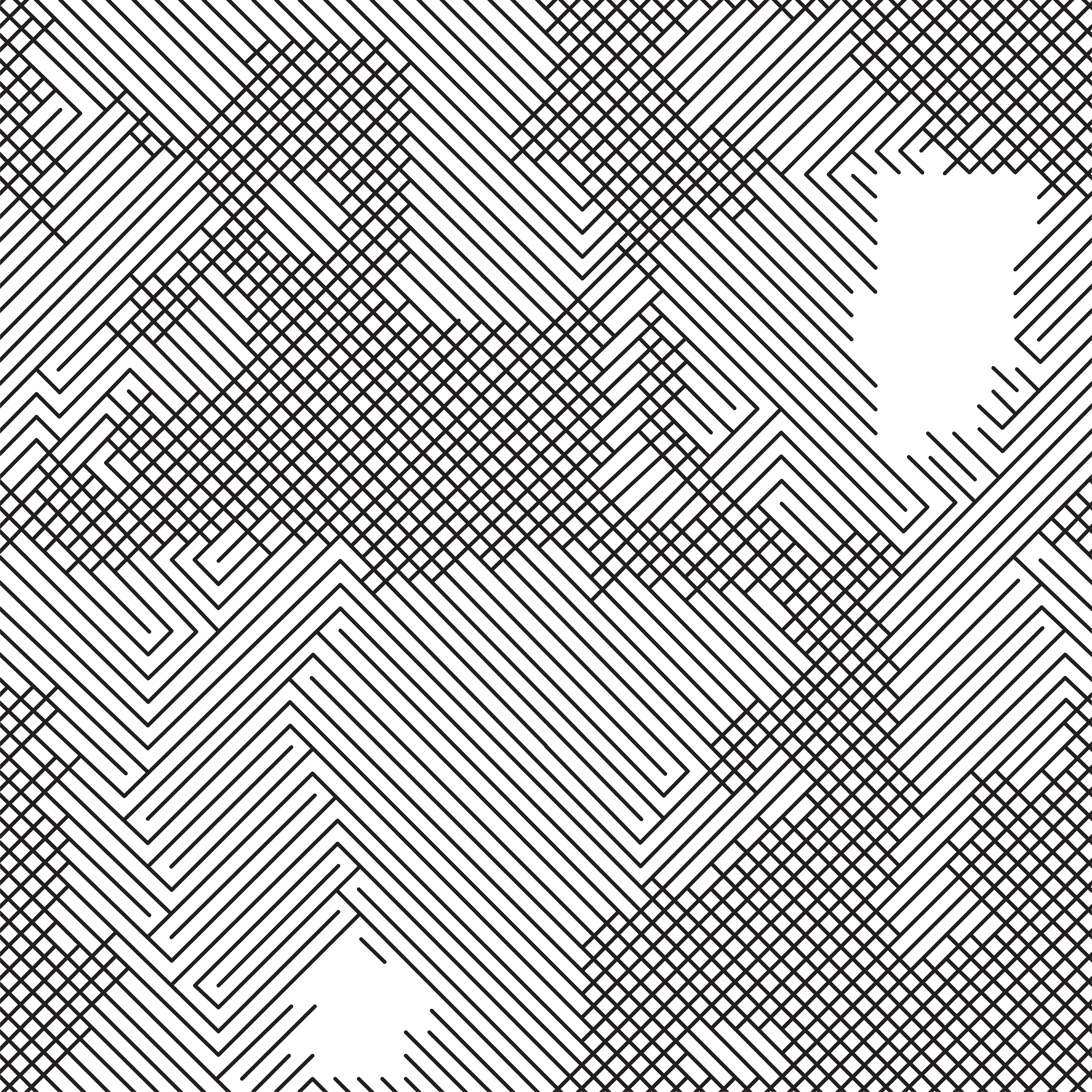
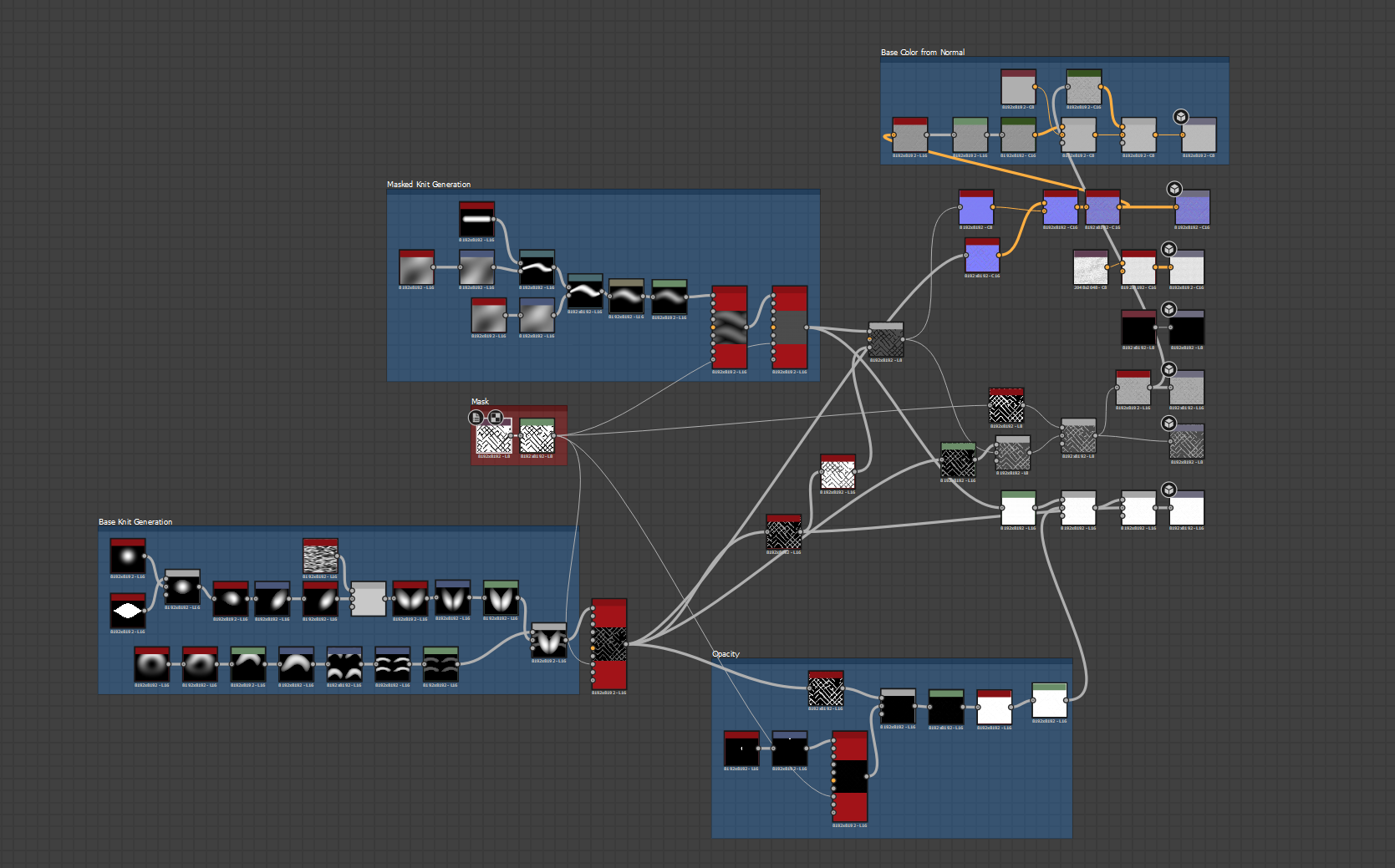
The two knit structures are developed procedurally, and the schematic below is used as the mask input to a tile sampler to properly align them.
The terminating hole of the rib knit was developed independently and placed by shifting the mask by the size of the knit structures and again using the tile sampler.
Given that this was a uniform color material the base color was created via a desaturation of the normal map, with some further processing.